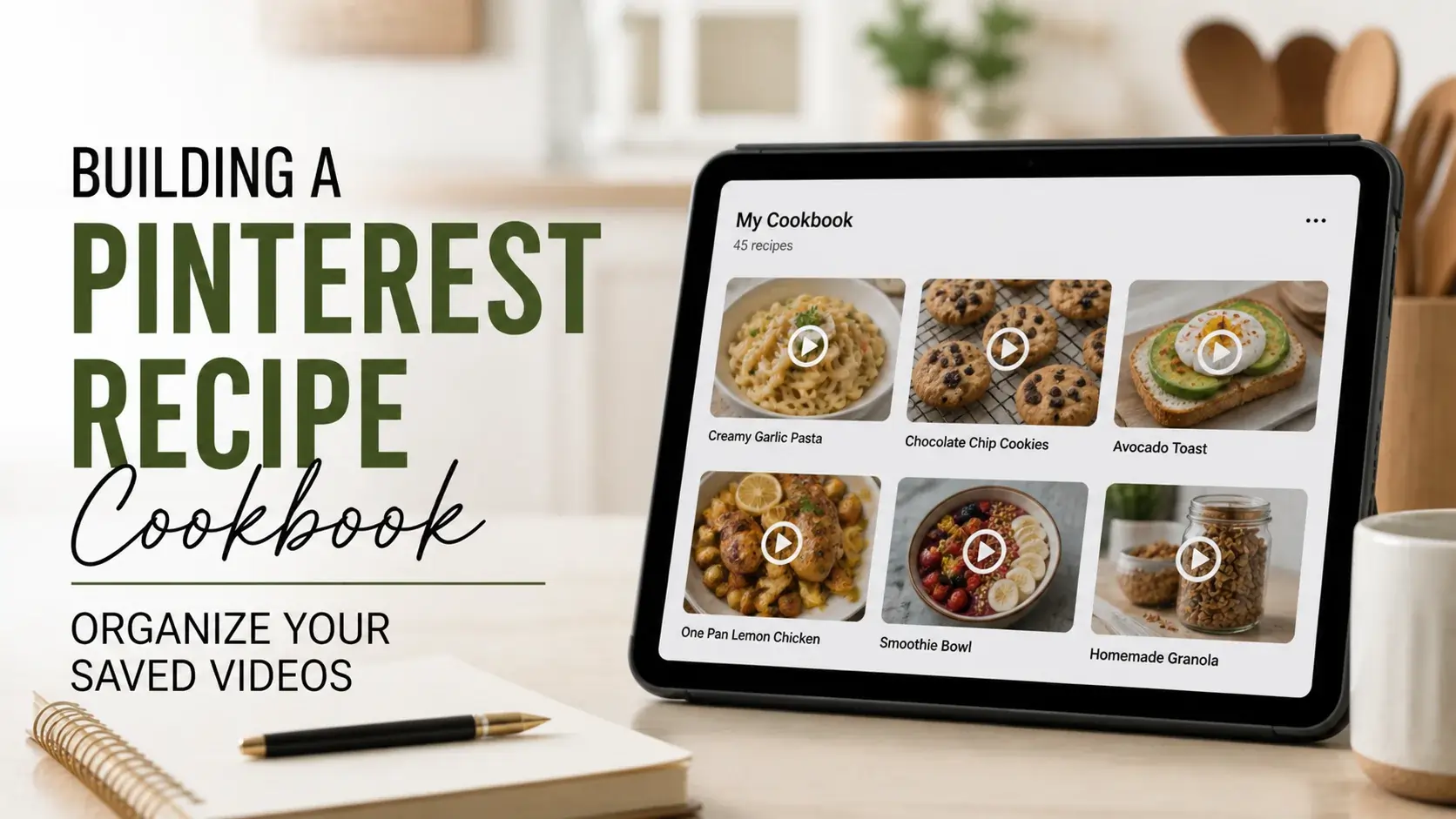
You found a perfect roasted vegetable recipe on Pinterest six months ago. Saved it to your “Recipes to Try” board. Now you’re trying to find it again — and you’re scrolling through 400 saved pins, none of which look immediately like what you remember. Was it the one with the lemon? The one with the herbs? The one with cauliflower?
Saving Pinterest recipes is easy. Finding them again, in the moment you actually want to cook, is where most people fail. The result is the same recipe-collection chaos that’s been frustrating cooks since cookbook hoarding became a thing — except now it’s digital.
This guide walks through building an actual usable cookbook from your saved Pinterest content. The process matters more than the technology.
Why Pinterest Boards Aren’t Cookbooks
Pinterest’s “save to board” feature feels like building a cookbook. It isn’t, for several reasons:
Boards have no structure beyond names. A “Recipes” board with 400 pins is technically a cookbook. Practically, it’s a recipe junk drawer.
Pinterest’s search within boards is weak. You can’t easily search your own saved pins by ingredient, time, technique, or any of the dimensions that matter when you’re choosing what to cook.
Pins are fragile. Pinterest occasionally removes content, breaks links, or restructures their platform. Recipes you “saved” can quietly disappear.
You can’t access offline. When the WiFi cuts out mid-cooking — exactly when you need recipe reference most — your Pinterest cookbook is unreachable.
No personal annotations. You can’t add notes about substitutions you made, family preferences, or “this was great but next time double the spices.”
A proper cookbook fixes all of these. It’s worth the small effort to build.
What an Actual Pinterest Cookbook Should Have
A genuinely useful recipe collection includes:
Categorized organization. Recipes grouped by meal type, cooking method, or other meaningful categories — not all dumped into one bucket.
Searchable text. Either the full recipe text (so you can search for “lemon” and find every lemon-using recipe) or a tagging system.
Personal notes. Your modifications, family reactions, ratings, anything that makes the recipe yours.
Offline access. Available even without internet, since cooking often happens in spotty-WiFi locations.
Visual reference. The Pinterest pin’s image (and ideally video) preserved alongside the recipe.
Source preservation. Links back to the original source for credit and updates.
The Three-Tier Cookbook Approach
Different recipes need different treatment based on how often you’ll actually cook them. We recommend three tiers:
Tier 1: Frequently Made Recipes
These are recipes you cook regularly — your personal classics. They deserve full treatment:
- Full text of the recipe (typed out, not just linked)
- The Pinterest video downloaded for offline reference
- High-resolution photos saved
- Your personal notes, modifications, ratings
- Categorized properly
You probably have 30-60 recipes like this. They’re worth the investment.
Tier 2: Occasional/Aspirational Recipes
These are recipes you’ve made once or twice, or want to try someday. Lighter treatment:
- Saved Pinterest pin (board organized by category)
- Maybe a brief note about your interest
- No need to download or transcribe yet
You might have 100-200 recipes here. They’re inspiration, not active cookbook content.
Tier 3: “Maybe Someday” Pins
These are pins you saved on a whim. They live on Pinterest in a separate board, get reviewed periodically, and most get culled. Don’t invest effort in these until they prove worth promoting to Tier 2.
The triage is what makes the system work. Without tiers, every pin gets equal weight, the cookbook becomes overwhelming, and you stop using it.
Building the Tier 1 Cookbook
Here’s the practical workflow for your active recipe collection:
Step 1: Choose Your Tool
Options for the active cookbook:
Notion — flexible, free for personal use, excellent for combining text/photos/videos. Good search. Works on phone.
Apple Notes / Google Keep / Evernote — simpler, native to your phone, fine for moderate collections.
Paprika Recipe Manager — purpose-built recipe app, $5 one-time purchase, excellent for serious cooks.
Plain folders + text files — no app needed, works forever, more setup.
Spreadsheets — actually great for power users who want to filter by multiple criteria.
Pick one and commit. Switching tools later costs you significant time.
Step 2: Set Up Categories
Categories that work for most cooks:
- Breakfast
- Lunch / Light Meals
- Dinner — Quick (under 30 min)
- Dinner — Project (over 1 hour)
- Sides
- Sauces, Marinades, Dressings
- Desserts
- Drinks
- Meal Prep / Freezer-Friendly
Adjust to your actual cooking patterns. A baker might need extensive baking sub-categories. A vegetarian needs different categories than a meat-focused cook.
Step 3: Add Recipes With Full Treatment
For each Tier 1 recipe:
- Type out the full recipe (ingredients with measurements, steps, time)
- Save the Pinterest video using a video downloader for offline reference
- Save the Pinterest image using an image downloader at full resolution
- Add the Pinterest source URL for crediting and possible updates
- Add personal notes (substitutions you’ve made, who likes it, etc.)
- Tag for ingredients (so you can search “chicken” and find all chicken recipes)
This is more work than just saving pins, but it’s the work that turns Pinterest browsing into an actual cookbook.
Step 4: Test the System
After building 5-10 recipes, actually use them. Cook one this week. Did the system work? Could you find the recipe easily? Was the offline reference useful? Did your notes help?
Adjust based on what you learn. The system should serve your actual cooking, not impose abstract organizational principles.
Maintaining the Cookbook
A cookbook is only useful if it stays current and accurate. Maintenance practices:
Update After Cooking
Right after making a recipe, take 2 minutes to update notes:
- Did you make modifications? Note them
- How did it turn out? Rate it
- Would you change anything next time?
- Family/guest reactions?
The notes accumulate value over years. Year 3, you’ll thank year 1 you for noting “next time, double the garlic.”
Promote and Demote Recipes
Annually, review your Tier 1 collection:
- Recipes you haven’t made in a year — demote to Tier 2 (or delete if you’re not feeling sentimental)
- Tier 2 recipes you’ve made multiple times — promote to Tier 1
- Tier 3 recipes that proved worth trying — promote to Tier 2
The collection stays focused on what’s actually useful in your cooking life.
Archive Outdated Versions
When you significantly modify a recipe, save both versions. Sometimes you want the original; sometimes the modified version is permanent. Keep both available.
Specific Recipe Categories That Benefit From Pinterest Sourcing
Some categories where Pinterest particularly shines:
International Cuisines
Pinterest has substantial coverage of cuisines that mainstream American cookbooks underserve. Indian regional cuisine, Korean home cooking, North African dishes, Eastern European traditions — all well-represented on Pinterest from creators in those traditions.
Dietary-Specific Cooking
Vegan, gluten-free, keto, paleo, and other dietary patterns have huge Pinterest presence. The platform’s tagging makes it easy to filter for your specific dietary needs.
Seasonal and Holiday
Pinterest excels at seasonal content. Build separate seasonal sub-collections that you reference each year — your annual Thanksgiving cookbook, your summer grilling collection, your winter comfort food rotation.
Restaurant Replicas
“Make X restaurant’s signature dish at home” content is abundant on Pinterest. Often successful, sometimes wildly off — vet before treating as authoritative.
Old-Family-Recipe Style
Many Pinterest users preserve traditional family recipes that don’t appear in published cookbooks. Surprisingly valuable for genuine home cooking traditions.
Quick Weeknight Dinners
Pinterest is dominated by quick-recipe content because that’s what gets saved. If your cooking life is mostly weeknight meals, Pinterest’s natural orientation matches your needs. Our companion guide on building a recipe video collection covers the video-specific workflow.
The Offline Access Question
Why offline access matters specifically for cooking:
Kitchens are often WiFi dead zones. Far from routers, surrounded by appliances that interfere with signal.
Hands-busy moments don’t allow troubleshooting. When you’re elbow-deep in dough, you can’t tap through WiFi reconnection screens.
Internet outages happen. Always at the worst moment.
Mobile data is expensive abroad. If you cook while traveling (extended-stay rentals), mobile data adds up.
The fix is downloading critical content (videos, recipe text, photos) for genuine offline access. Apps that depend on WiFi for every action fail in real kitchens.
Sharing Your Recipe Collection
Some thoughts on sharing:
With Family
Share specific recipes you love with family who might also enjoy them. Whether through the cookbook app’s sharing features, or just sending the Pinterest pin link.
With Friends
Same — but be selective. The “I tried 50 new recipes this year” share with friends is overwhelming; the “this single dish blew my mind, here’s why” share is welcome.
Publicly
If you have a strong personal twist or interpretation of a recipe, that’s potentially shareable content (blog post, your own Pinterest board, social media). Just make sure to credit original sources clearly.
Copyright Considerations
Recipes themselves aren’t copyrightable in most jurisdictions (per U.S. Copyright Office guidance). The specific written expression of a recipe (creative descriptions, personal stories around it, photos, videos) is copyrightable. So you can recreate any recipe you find; you can’t copy-paste the original blog post text without permission.
Frequently Asked Questions
How long does it take to build a useful cookbook?
Tier 1 organization for 30-50 recipes: 2-4 hours of dedicated effort. After initial setup, ongoing maintenance is 5-10 minutes per new recipe added.
Should I include recipes from non-Pinterest sources too?
Yes. The cookbook should include all your active recipes regardless of source — Pinterest, books, magazines, friends, your own creations. Source isn’t the organizing principle; usefulness is.
What if a Pinterest video gets deleted from the platform?
If you’ve downloaded it locally, you still have your copy. This is a major argument for downloading rather than just relying on saved pins.
Can I share my cookbook with my partner or family?
Tools like Notion and Google Keep have native sharing. Apple Notes can share specific notes. Paprika has family sharing for paid users. Choose tools with sharing in mind if that matters to you.
Should I include nutritional info?
For most home cooks, no — too much work for limited benefit. If you have specific health needs, sure. Otherwise, focus on what helps you cook better.
How do I handle recipes with very long prep times that are hard to capture in a Pinterest video?
The Pinterest video might be a teaser; the full recipe needs to come from the source blog post. Save both: the video for visual reference, the text for actual instructions.
What about meal planning integration?
Some cookbook apps (Paprika especially) integrate meal planning. If meal planning matters to you, consider this when choosing tools. Otherwise, simple cookbook organization without meal planning is fine.
Conclusion
Pinterest is great for finding recipes; terrible for organizing them. Building an actual cookbook from your saved Pinterest content is the step that converts impulsive saving into useful long-term resource.
The system works because of triage — not every recipe deserves full treatment, but the recipes you actually cook deserve organization that respects your time. Tier 1 gets full treatment, Tier 2 stays casual, Tier 3 gets reviewed and culled.
For Pinterest videos and images that need to live in your cookbook, our video downloader and image downloader handle the technical part. The cookbook organization is your investment in your future cooking life.