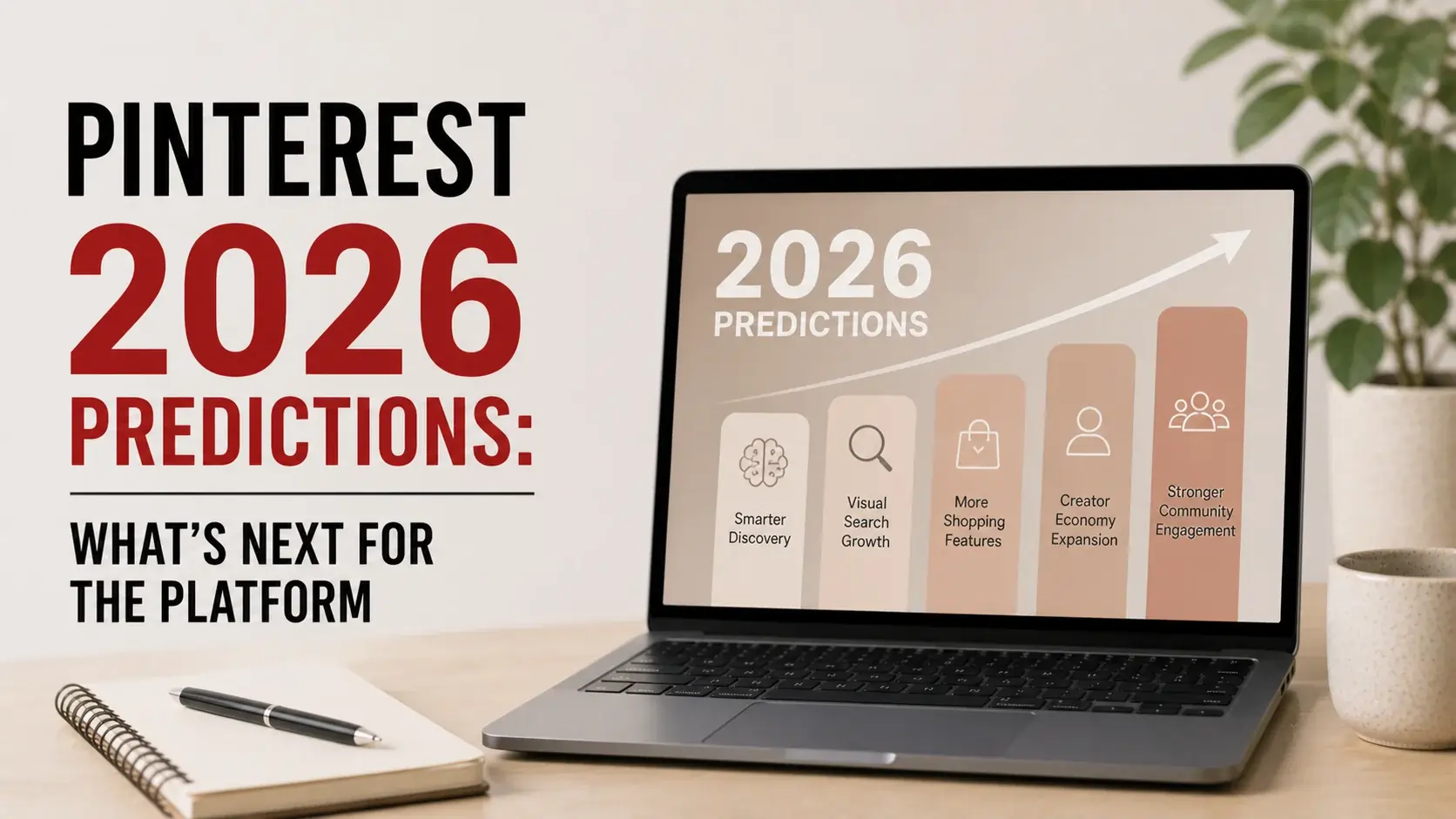
Every January, marketing publications crank out “Pinterest trends to watch this year” articles. Most of them are PR fluff, repeating Pinterest’s official talking points without genuine analysis. The actually-useful predictions come from looking at what Pinterest is doing internally, what users are doing on the platform, and what the broader social media landscape suggests will happen next.
This article makes specific, falsifiable predictions about Pinterest’s direction in 2026 and beyond. Some will be right; some will be wrong. The goal isn’t oracle accuracy — it’s helping you make better decisions about how to use Pinterest now based on where it’s actually headed.
The Macro Context: Pinterest’s Position in 2026
Before predictions, an honest assessment of where Pinterest stands:
Pinterest is profitable but not growing rapidly. The platform has reached a stable mature state. It’s not adding users at the pace it once did. It’s not declining either. It’s a known quantity with known economics.
TikTok competitive pressure has settled. Pinterest tried to compete with TikTok via Idea Pins (2021-2023), then largely abandoned that strategy. Pinterest has accepted that it’s a different kind of platform — search-driven and inspiration-focused rather than feed-driven and entertainment-focused.
E-commerce ambitions remain unfulfilled. Pinterest has pushed shopping features for years. They generate some revenue but haven’t transformed the platform into the shopping destination Pinterest’s leadership hoped. Users still primarily come for inspiration, not purchase.
AI integration is incoming. Like every platform, Pinterest is integrating AI. Most of this is happening behind the scenes (better recommendations, image search, content moderation). Some will become user-facing features.
Creator economy investments are mixed. Pinterest invests in creator tools but hasn’t built the kind of creator community that platforms like Instagram and TikTok have. This isn’t necessarily a failure — it might just be that Pinterest’s audience doesn’t want creator-driven content the way other platform audiences do.
This baseline shapes what’s likely vs unlikely in 2026.
Prediction 1: AI-Powered Search Will Become the Default Interface
What’s Happening
Pinterest is integrating AI throughout its search experience. Visual search has been there for years. Natural language search (“show me modern but cozy living rooms with leather furniture”) is being added.
What’s Likely
By end of 2026, Pinterest’s primary discovery interface will feel more like a conversation with an AI than a traditional search box. You’ll describe what you’re looking for in natural language; AI will surface relevant content based on understanding your intent rather than matching keywords.
Why This Matters
Traditional Pinterest SEO (specific keyword optimization) becomes less valuable. Content quality and visual recognizability become more important. Pins optimized for AI understanding (clear subjects, identifiable styles, contextual relevance) will outperform pins optimized for old-school keyword matching.
For users, this means easier discovery of niche content but potentially more algorithm-driven homogenization of recommendations.
Prediction 2: Shopping Features Will Get More Aggressive (And More Annoying)
What’s Happening
Pinterest desperately wants to be a shopping platform. Every quarter brings new shopping features, more product tags, more Buy buttons.
What’s Likely
Shopping integration becomes more pervasive — and more intrusive. Users will see more product tags overlaying inspiration pins. Distinguishing “inspiration” from “advertisement” will get harder. Pinterest will probably introduce more aggressive product-comparison features, price tracking, and deal alerts.
Why This Matters
The platform will feel less like inspiration discovery and more like shopping. Users who came to Pinterest for non-commercial inspiration may grow frustrated. Some users will adapt; others will reduce their Pinterest usage.
For non-commercial content creators, this trend reduces algorithmic visibility. Pinterest is tilting toward shoppable content, which means non-shoppable content competes harder for distribution.
Prediction 3: Video Will Continue Growing as a Format
What’s Happening
Despite scaling back the Idea Pins push, Pinterest’s video content continues growing. Standard video pins (single-clip, searchable, persistent) are getting more support.
What’s Likely
Video pins will become the dominant format for new content in active categories. Image-only pins won’t disappear, but creators in cooking, beauty, fitness, DIY, and similar visual-process categories will increasingly default to video.
The standard video pin format will probably get incremental improvements — slightly longer durations supported, better editing tools, possibly some interactive elements (without going as far as Idea Pins did).
Why This Matters
If you’re creating Pinterest content, learning short-form video creation is increasingly necessary. Static image creators in video-friendly categories will see relative decline. Our Pinterest for content creators guide covers the practical workflow implications.
For users, video pins will become more of the experience. People who prefer Pinterest’s traditional static-image inspiration may need to actively filter or accept change.
Prediction 4: Creator Tools Will Improve But Won’t Match Other Platforms
What’s Happening
Pinterest has been building creator tools (analytics, monetization features, creator programs) but lags behind YouTube, TikTok, and Instagram.
What’s Likely
Pinterest will continue adding creator tools — better analytics, some new monetization paths, possibly small partnerships with influencers. But Pinterest probably won’t become a primary platform for creators the way YouTube or TikTok are. The audience just doesn’t engage with personality-driven creator content the same way.
Why This Matters
Creators choosing where to invest time should keep Pinterest as a secondary platform, not primary. Pinterest is great for repurposing content from primary platforms (YouTube, Instagram), not for building a primary creator presence.
The exception: niche-specialist creators (cooking, design, DIY) who can build “the Pinterest expert in X” position. These can succeed primarily on Pinterest. Most general-purpose creators can’t.
Prediction 5: Algorithm Will Get Less Predictable
What’s Happening
Pinterest’s algorithm has been getting more AI-driven and less rule-based. The shift makes it harder for creators to game the system but also harder to plan content strategy.
What’s Likely
Algorithm transparency will continue declining. Pinterest will say less publicly about what works because they don’t want creators gaming optimization. Specific tactics that work will rotate faster.
Performance variance will increase. Two similar pins from the same creator might perform very differently for reasons that aren’t clear. Creators will need to focus on quality and consistency rather than optimization tricks. Our Pinterest algorithm guide covers what’s currently knowable.
Why This Matters
The era of “5 hacks to grow on Pinterest” content is ending. What works changes too fast for evergreen optimization advice. Creators who succeed will be those building genuinely valuable content rather than optimizing for algorithmic tricks.
Prediction 6: Pinterest Will Lean Into Its “Different Vibe”
What’s Happening
Pinterest has gradually accepted that it’s not Instagram, not TikTok, not Twitter. It’s a calmer, more searchable, more inspiration-focused platform with a specific demographic skew (more women, more 25-54 age range, more home/lifestyle interest).
What’s Likely
Pinterest’s marketing and product decisions will increasingly emphasize what makes it different rather than trying to match other platforms. Less algorithm-driven engagement; more search-driven utility. Less ephemeral content; more persistent. Less follower-counting; more topic authority.
The platform might also lean into mental wellness positioning — “the calmer social platform” — to differentiate from Twitter/X anxiety, Instagram comparison spirals, TikTok addiction patterns.
Why This Matters
If you don’t fit Pinterest’s emerging identity, your engagement will continue declining. If you do fit (visual, inspirational, search-friendly content), you’ll probably see relative improvement.
For users, Pinterest may become a more deliberate destination — “I’m going to Pinterest specifically for this” — rather than ambient social scrolling.
Prediction 7: Privacy Pressure Will Force Tracking Changes
What’s Happening
Apple’s App Tracking Transparency, Google’s slow phase-out of third-party cookies, and increasing global privacy regulations are reshaping how all platforms can track users and target ads.
What’s Likely
Pinterest’s ad targeting will become less precise. The platform will probably push more contextual advertising (showing ads based on what content you’re viewing right now, rather than your profile). First-party data (what users do on Pinterest itself) becomes more important than cross-platform tracking.
This may also push Pinterest to develop more shopping features — when ad targeting gets harder, owning the conversion path becomes more valuable.
Why This Matters
For advertisers, costs may rise as targeting precision falls. For users, ads may become slightly more obvious (more clearly contextual to current pins) and slightly less creepy (less about your behavior elsewhere).
Prediction 8: Pinterest Boards Will Get Smarter
What’s Happening
Pinterest has been experimenting with AI-generated board organization, automatic tagging, and intelligent suggestions for what to add to boards.
What’s Likely
Within 2026, Pinterest will probably introduce AI-powered board curation features. The platform might automatically suggest categorization for your saves, propose new boards based on patterns it detects, or auto-tag your pins for better searchability.
For some users, this will feel helpful. For others, it’ll feel like Pinterest is making decisions about their personal organization without permission.
Why This Matters
Casual Pinterest users will benefit from automation that makes the platform easier. Power users who carefully curate their own organizations may find AI suggestions intrusive — but probably can be disabled.
Prediction 9: International Markets Will Drive Growth
What’s Happening
Pinterest’s North American user base is mature. International markets (Europe, Latin America, parts of Asia) are still growing.
What’s Likely
Pinterest will invest more in international localization, payment systems for international shoppers, and creator programs in non-English markets. Content from international creators may get more algorithmic visibility globally.
Why This Matters
Creators in international markets have growth opportunity. Pinterest’s existing dominance in fashion, food, and home content might extend more deeply into other countries’ versions of these categories.
For US creators, increased international competition for global audience attention. The “Pinterest creator from anywhere” model becomes more competitive.
Prediction 10: Pinterest’s Identity Crisis Will Continue
What’s Happening
Pinterest has spent years uncertain whether it wants to be:
- A search engine for ideas
- A shopping platform
- A social network
- A creator economy
- A B2B marketing channel
It’s tried to be all of these and hasn’t fully committed to any.
What’s Likely
This identity uncertainty will continue. Pinterest will keep adding features across multiple identity directions, succeeding moderately at all of them and dominating none. The platform’s value proposition to users will remain “kinda inspiration, kinda shopping, kinda social.”
Why This Matters
Users and creators who accept Pinterest’s hybrid nature will get more value than those who try to use it as one specific thing. The platform isn’t going to commit to a single identity, so adaptability is key.
What These Predictions Mean for You
For different Pinterest user types:
For Casual Users
Pinterest will keep working as inspiration discovery, but with more shopping integration and AI-driven recommendations. The experience will gradually shift even if you don’t actively change behavior. Periodically resetting your interests (saving in new directions) will be more important to keep recommendations fresh.
For Creators
Investment timing matters. Standard video pins remain the safest format. Niche specialization beats general content. Consistent moderate output beats sporadic bursts. Don’t chase Pinterest-specific trends — build authority in your topic that translates beyond the platform.
For Marketers
Pinterest remains valuable for B2C and lifestyle businesses. The platform’s slow user growth limits ceiling on Pinterest-specific marketing investment. Treat it as one channel among several rather than primary focus.
For Brands
Pinterest is becoming more aggressively commercial. This benefits brands willing to invest in shopping features but pressures brands relying on organic distribution. Original creative remains essential — copying competitors’ approaches doesn’t scale.
For Researchers
Pinterest data continues being interesting for understanding consumer interests and lifestyle trends. The platform’s persistent nature makes it valuable for longitudinal analysis where Instagram and TikTok content disappears too quickly.
What I’m Probably Wrong About
Predictions are predictions. Some of these will be wrong. My honest assessment of where I might be off:
I’m probably underweighting AI’s transformative potential. AI integration might happen faster and more dramatically than incremental predictions suggest. Pinterest could fundamentally reshape its interface around AI in ways that make current usage patterns obsolete.
I’m probably overweighting Pinterest’s stability. Mature platforms can decline faster than expected when something else captures their audience. Pinterest losing share rapidly to a new competitor isn’t impossible.
I’m probably underestimating shopping growth. Pinterest has been pushing shopping for years with limited success. But cumulative product improvements might cross a threshold where shopping becomes meaningful for users in ways it hasn’t been.
I’m probably wrong about specific feature launches. Predicting which features Pinterest will launch when is impossible. They’ll launch things I haven’t anticipated; some predictions here will turn out to be wrong.
The pattern matters more than the specifics. Pinterest is a mature, evolving, increasingly AI-driven platform with a stable but distinctive identity. Use it accordingly.
Frequently Asked Questions
Should I invest more or less in Pinterest as a creator?
If you’re starting out, invest in your primary platform first (whichever fits your content). Add Pinterest as secondary investment once your primary platform is established. Don’t make Pinterest your only platform unless you fit one of the niches where Pinterest is genuinely primary (cooking, home design, DIY).
Will Pinterest still exist in 5 years?
Almost certainly yes. The platform is profitable, has stable user base, and provides value other platforms don’t. It might look different than today, but Pinterest dying or being acquired into oblivion seems unlikely on any near-term horizon.
Should I learn video creation specifically for Pinterest?
If you’re already learning video for other platforms, Pinterest video is bonus distribution. If video isn’t part of your existing strategy, learning specifically for Pinterest is hard to justify ROI on.
How should businesses think about Pinterest in 2026?
For B2C lifestyle businesses (fashion, food, home, beauty), Pinterest deserves investment. For B2B and most service businesses, Pinterest is a poor fit regardless of trends. Don’t force Pinterest if your audience isn’t there.
Will Pinterest’s algorithm changes hurt my existing content?
Possibly. Algorithm changes always create winners and losers. Building diverse content that doesn’t depend on specific algorithm behaviors helps insulate against changes. Don’t optimize for tactics that might be obsolete in 6 months.
How can I stay informed about actual Pinterest changes?
Pinterest’s official business blog announces major changes. Industry publications cover most updates within days. Following Pinterest’s product team on social platforms gets some early signals.
What about Pinterest stock as an investment?
This article isn’t financial advice and you should consult a financial professional for investment decisions. Pinterest’s business is real but growth-constrained, which is reflected in stock pricing. Investing in any specific platform stock has risks beyond just the platform’s success.
Conclusion
Pinterest in 2026 will be a more AI-driven, more shopping-focused, more video-oriented platform than it was in 2024 — but probably won’t dramatically transform its core nature as search-driven visual inspiration. The directional changes are predictable; specific feature launches and timing aren’t.
The right user/creator/brand response is consistency and adaptability. Build content and strategies that work across reasonable platform changes rather than optimizing for specific current behaviors that might shift.
For Pinterest content that holds value across platform changes (your own original work, well-curated reference libraries, evergreen content in stable categories), our video downloader and image downloader preserve what’s worth preserving regardless of how the platform evolves.
The platform will keep changing. The fundamental human interest in visual inspiration won’t. Build for the latter.