Most Pinterest users don’t think about where pins come from. You see an image, you save it, you scroll. The pin feels native to Pinterest — like Pinterest is where the content lives.
But Pinterest is mostly a distribution platform, not a content creation platform. The vast majority of pins are reposts of content originally created somewhere else: blog posts, magazine websites, retailer photos, designer portfolios, Instagram accounts. Understanding this changes how you use Pinterest, how you credit creators, and how you find authoritative information.
Pinterest’s Real Role in the Content Ecosystem
Pinterest functions less like Instagram and more like a search engine. The platform itself doesn’t produce most of what’s on it — it indexes, organizes, and surfaces content from across the web.
When someone “pins” content to Pinterest, they’re typically:
- Saving an image from a blog post (with the URL embedded)
- Saving a product photo from a retailer’s site
- Saving from another social media platform
- Saving an image they found through Google Image Search
- Reposting another Pinterest pin (which itself probably came from somewhere else)
The pin lives on Pinterest, but the underlying content has a source — a website, an Instagram account, a magazine article, somewhere it originally appeared.
This matters because:
Pinterest is a discovery layer over the web, not a separate content world. What you find on Pinterest is largely what exists on the broader internet, filtered through Pinterest’s algorithm and presentation.
Original creators usually want traffic, not just attribution. A blogger whose recipe gets pinned wants visitors clicking through to their blog. The save itself doesn’t pay rent.
Attribution chains break. Every time content is repinned without proper source, the attribution becomes harder to recover.
The Major Source Categories
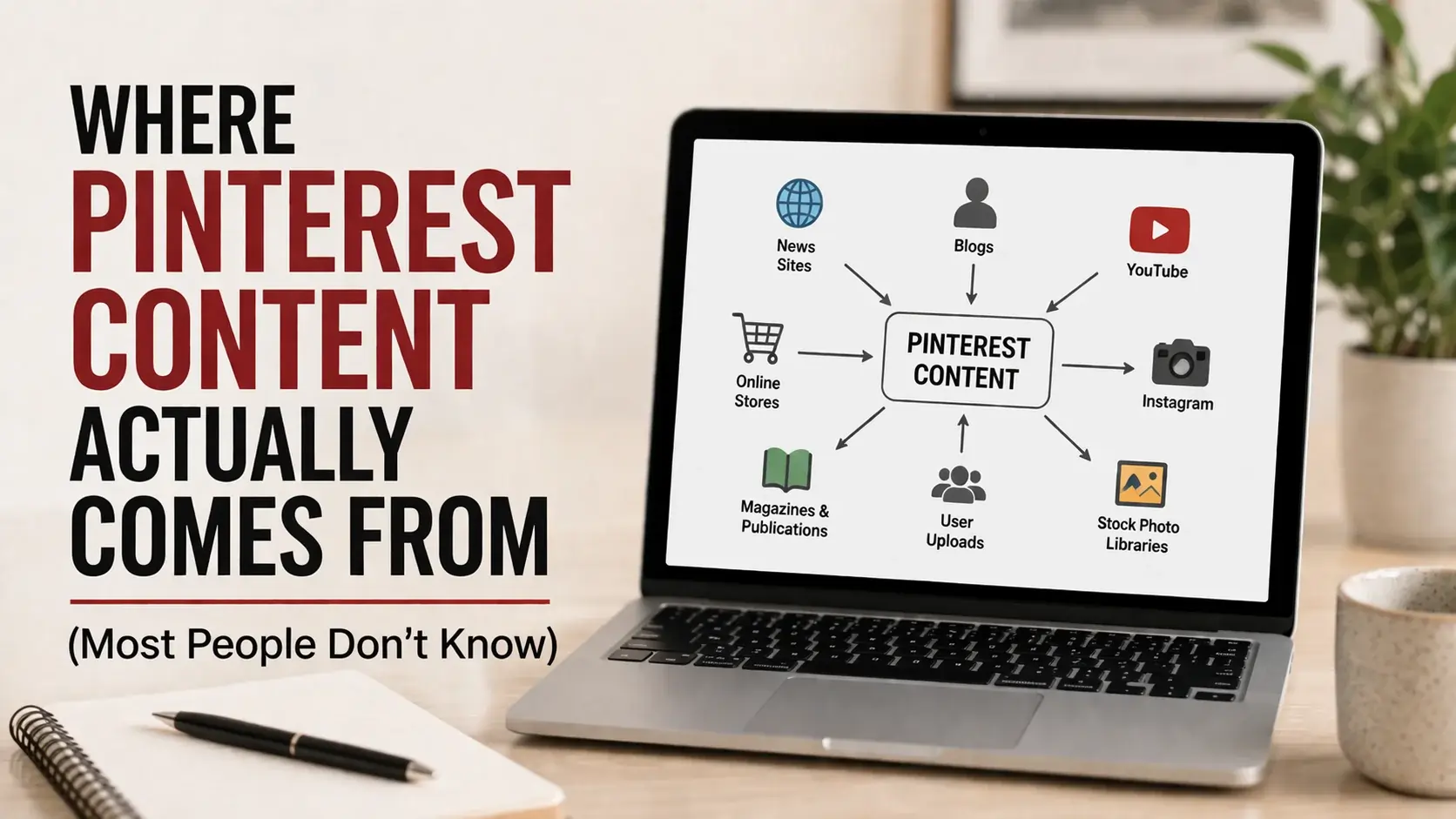
Pinterest content comes from several major buckets:
Blogs and Personal Websites
The largest source. Food bloggers, design bloggers, parenting bloggers, fashion bloggers — independent content creators who build websites and pin their own content to Pinterest for distribution.
When you pin a recipe, the source URL usually goes to the blog post containing the full recipe. The pin is the marketing; the blog post is the content.
This is the symbiotic relationship Pinterest depends on. Bloggers get traffic; Pinterest gets content; users get organized inspiration. When it works, everyone benefits.
Retailer and Brand Sites
Significant volume. Wayfair pins furniture; West Elm pins decor; Anthropologie pins clothing; thousands of e-commerce sites pin product photography.
These pins exist primarily for shopping. The source URL goes to a product page where you can buy the item. Pinterest functions as a visual catalog drawing from across retail.
Magazine and Editorial Sites
Substantial coverage. Architectural Digest, Vogue, Real Simple, Bon Appétit, Better Homes & Gardens — established publications maintain Pinterest presences pinning their editorial content.
The source URL goes to articles on the publication’s site. Pinterest pulls editorial content into its ecosystem while sending traffic back to the publishers.
Other Social Platforms
Common but increasingly fraught. Many Pinterest users save Instagram content to Pinterest, sometimes with attribution, sometimes not. The pin’s source URL might go to the Instagram post, or to a blog that screenshotted the Instagram post, or to nowhere identifiable.
This category has the worst attribution problems. Instagram’s reposting culture often breaks original credit; Pinterest then inherits the broken attribution.
User-Generated Original Content
Smaller than you’d think. Most “Pinterest accounts” pin found content rather than creating original content. Truly Pinterest-native creators (people producing original visual content specifically for Pinterest) are a minority of high-volume accounts.
When original content does appear, it’s often from creators who post once or sporadically — not the high-volume curated accounts that dominate feeds.
Stock Photography and Public Domain
Some content is intentionally license-free. Unsplash, Pixabay, and similar services provide images explicitly intended for free reuse. Some Pinterest accounts pull heavily from these sources.
This is the smallest category but the most legally clean — content here is genuinely available for unrestricted use.
Why Attribution Gets Lost
The attribution problem on Pinterest is structural, not malicious:
The Repin Cascade
A pin gets created with proper attribution to its blog source. Someone repins it; the repin keeps the source. Someone repins the repin; same. This continues for months.
Eventually, someone screenshots the pin and creates a new pin with the screenshot — losing the original attribution chain. From that point forward, repins of the screenshotted pin have no source. The chain is broken.
This happens constantly across Pinterest. Old, popular pins often have attribution that no longer connects to the original creator.
Source URL Dies
Bloggers go out of business. Magazine articles get reorganized. Retailers update their site structure. The source URL that worked when a pin was created might 404 years later, severing the attribution even though the pin still exists.
Pinterest sometimes detects dead URLs and tries to update them, but this is imperfect. Many pins have stale source URLs that don’t reach the original content anymore.
Creators Don’t Always Pin Their Own Content First
If a blogger publishes a recipe but doesn’t pin it themselves, someone else might pin it first. Now the “original pin” credits the wrong account — usually the user who pinned it, not the actual creator. Future repins propagate this misattribution.
Cross-Platform Content Has Multiple “Originals”
A photographer publishes on their portfolio site, Instagram, and Behance simultaneously. Which is the “original” for attribution purposes? Pinterest pins might link to any of the three, or to none.
Aesthetic Editing Removes Markers
Pinterest’s algorithm rewards clean visuals. Original photos sometimes have watermarks, text overlays, or branding that detract from clean aesthetics. Some users remove these markers before pinning, severing attribution by deliberate choice.
Why This Matters
The attribution problem affects Pinterest users in several ways:
Crediting Creators Becomes Hard
You found a beautiful photo and want to credit the photographer in your own work. The Pinterest pin has no source URL or links to a dead page. The image appears on dozens of other sites with no clear original source. You can’t credit who you don’t know.
This is a real problem for designers, bloggers, and content creators who genuinely want to attribute their inspirations properly.
Verifying Information Becomes Hard
A “fact” on a Pinterest pin claims dramatic health benefits from some food. The pin source goes to a generic content farm. The “fact” might be true, exaggerated, or invented — without traceable origin, you can’t verify.
This matters more for some categories (health, history, science) than others (design, style). But the attribution problem affects information quality across all categories.
Supporting Creators Becomes Hard
You love a creator’s work and want to support them — buy their book, take their course, hire them. But the Pinterest pin doesn’t lead back to the creator. They get the engagement; the algorithm gets the engagement; the creator gets nothing they can leverage commercially.
For the symbiotic relationship between Pinterest and creators to work, attribution needs to flow back. When it breaks, the relationship breaks.
How to Find Original Sources
When you genuinely care about attribution:
Click the Pin’s Source URL
The first attempt is always: click into the pin and see where the source URL goes. Sometimes it leads directly to the original creator. Sometimes it leads to a content farm or dead page.
Reverse Image Search
Right-click the image (or use Google Lens) to do a reverse image search. This often surfaces other places the image appears, including potentially the original.
Look at the dates on the various appearances — earliest is probably original. Look at the credibility of each appearance — established publications are usually closer to original than content farms.
Check Image Metadata
Sometimes images carry EXIF metadata identifying the photographer or copyright holder. Right-click → Properties (Windows) or Get Info (Mac) on a saved image; look in the metadata for relevant fields.
This is increasingly rare as platforms strip metadata, but worth checking for older content.
Look at the Pin’s Creator
The Pinterest user who pinned the content might not be the original creator, but they might know the source. Sometimes their other pins reveal where they pull content from.
Search for Distinctive Visual Elements
If an image has unique elements (specific architecture, recognizable products, unusual styling), searching for those elements can lead to the original context.
When You Can Save Pins With Confidence
Despite attribution problems, some categories of Pinterest content are unambiguous about source:
Pins with clear source URLs to active blogs — when the source URL works and goes to a credible publication, you have your attribution.
Pins from verified Pinterest business accounts — when established brands or publications are pinning their own content from their own accounts, the attribution is direct.
Pins from named photographers and designers — when a creator’s name is in the username and their content matches their portfolio elsewhere, you can verify the attribution.
Pins explicitly labeled as Creative Commons or stock — when the creator has explicitly licensed the content for free reuse.
For these categories, you can save and reference confidently. For others, exercise more caution.
How This Affects Your Pinterest Strategy
If you create content and want Pinterest distribution:
Pin Your Own Content First
Whenever you publish something pinnable, pin it from your own Pinterest account first. This establishes you as the originating account. Future repins still trace back to you.
Use Branded Image Elements
Subtle branding (your URL on images, consistent visual style, recognizable color palette) makes attribution survive even when explicit credits get stripped. Make your brand visually identifiable.
Embed Watermarks Strategically
Watermarks reduce aesthetic appeal but preserve attribution. Strike a balance — small, unobtrusive watermarks that don’t dominate the image but make attribution permanent.
Maintain Source Page Quality
Pinterest values destination quality. If your blog post is excellent (loads fast, valuable content, mobile-friendly), Pinterest’s algorithm rewards your pins. If your destination is poor, your pins underperform regardless of how good they look. Our guide on how Pinterest’s algorithm works goes deeper on this dynamic.
If you save Pinterest content as a user:
Note Source URLs in Your Saved Files
When you download Pinterest content, keep the source URL alongside the saved file. A simple text file in the same folder works. Future-you will thank present-you.
Verify Before Republishing
If you’re considering using Pinterest content somewhere else (your own blog, social media, mood boards for clients), verify the source first. Republishing without verified attribution is a copyright risk. Our Pinterest copyright guide covers this in detail.
Credit the Original When Possible
Even when not legally required, crediting the original creator is good ethical practice. It maintains the creator economy that produces content you enjoy.
The Future of Pinterest Attribution
The attribution problem isn’t getting fixed soon. A few partial improvements are happening:
Pinterest’s Visual Search Improvements
Pinterest has invested in visual search and computer vision. Their internal tools likely identify duplicate content and could theoretically maintain attribution chains better. Whether they will is a product decision.
Creator Tools
Pinterest has rolled out tools for verified creators that help them claim their content. Adoption is limited but growing.
Industry Pressure
As copyright disputes grow, platforms face pressure to maintain attribution. Pinterest could face increased legal liability if they continue allowing wholesale attribution loss.
Blockchain-Based Attribution (Speculative)
Various services are working on blockchain-based attribution that follows content across platforms. Whether this gains adoption remains to be seen.
Frequently Asked Questions
What percentage of Pinterest content is original to the platform?
Estimates suggest 5-15% of Pinterest content is created originally for Pinterest. The vast majority comes from elsewhere — blogs, retailers, magazines, other platforms.
Does Pinterest profit from this content sourcing?
Yes. Pinterest’s value as a platform depends on having lots of high-quality content, most of which they don’t pay for. Pinterest provides distribution infrastructure; creators provide content; users provide engagement.
Why don’t bloggers complain more about Pinterest?
Many do, but Pinterest also drives substantial traffic to bloggers. The relationship is symbiotic when working well. Complaints concentrate when pins have stripped attribution or when Pinterest’s distribution algorithms hurt traffic.
Should I credit Pinterest when I use found content?
Pinterest is the discovery platform, not the creator. Credit the creator (when identifiable). Mentioning “found via Pinterest” is okay but not equivalent to crediting the creator.
What if I can’t find any source for a Pinterest image?
Treat unsourced content as “use cautiously.” Personal reference is generally fine; commercial use without verified attribution is risky. Either find the source or use clearly licensed alternatives.
Are there Pinterest competitors with better attribution?
Some platforms (like Behance for design, Are.na for curation) have stronger attribution norms because their user base values it. Pinterest’s mass audience prioritizes visual appeal over attribution.
Does Pinterest support DMCA takedowns?
Yes. Pinterest has formal processes for copyright owners to request removal of unauthorized pins. The platform complies with Digital Millennium Copyright Act requirements.
Conclusion
Pinterest is fundamentally a distribution layer over web content, not a content creation platform in itself. Most pins originated elsewhere — usually a blog, retailer, magazine, or social platform — and Pinterest’s role is organizing and surfacing them visually.
This shapes how you should use the platform. For inspiration, Pinterest is excellent. For verification, it’s unreliable. For supporting creators, you need to do detective work to find the actual origins.
For Pinterest content you genuinely value, our video downloader and image downloader save it at full quality regardless of attribution chains. The technical preservation is straightforward; the ethical attribution is the harder problem — and one worth taking seriously when you republish anywhere.